1. Snowglobe builds a 3D set from one line of text
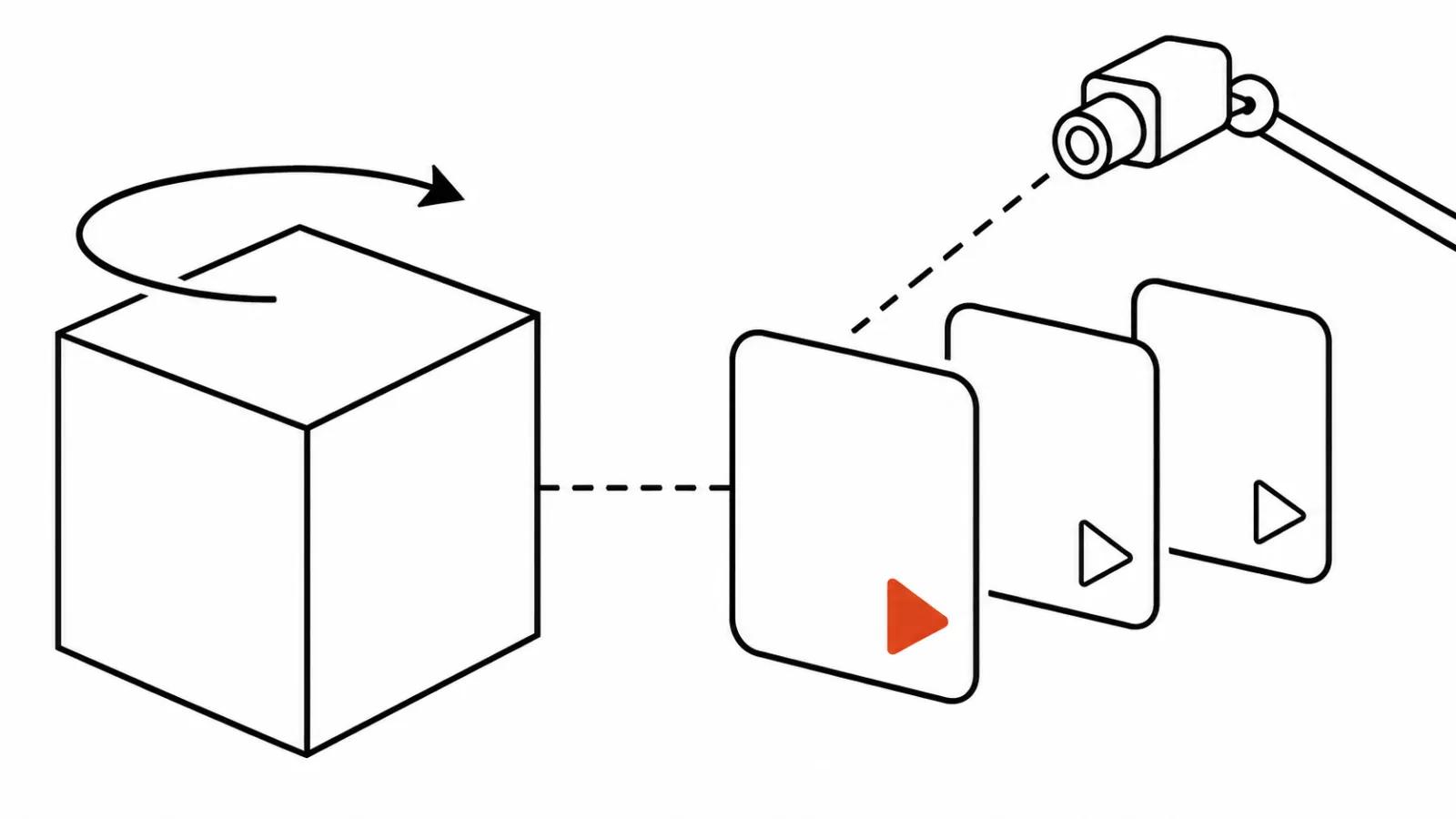
A Snowglobe breakdown relayed by VP Land on November 23: the engine builds an editable 3D world mesh from a single line of text or a single image. Inside that world you place actors, set cameras and send recorded takes into AI video generation. Because shots are filmed inside one world, streets, buildings and light direction hold between setups, per the company. Scout photos work as a base for the set, and a rebuild from image mode restores the terrain, the layout and the angle of the original camera. Assets come from your own library first, then from a built-in one of nearly 500. Buildings marked Can go inside open up an interior. Generation and take rendering cost Plot Points. A separate breakdown walks through the Snowglobe workflow.
Why this matters: light and geometry stop drifting from shot to shot. A director works on the world, and the model receives a set that already exists.
2. Lemonlight Hero: from brief to storyboard
VP Land on November 21 and No Film School on November 19: Hero is a synchronized hub that carries a project from the client brief to a treatment, a script and a storyboard. Rewrite a scene and the shot list and schedule update with it. References hold between shots, per Lemonlight: a photo carries into every frame, the actor's face in shot 1 stays the same in shot 20, logos do not drift. The Hero agent edits content on its own and runs as an MCP server, so an assistant like Claude can change copy, make images and produce call sheets. The company has produced more than 50,000 branded videos.
Why this matters: a scene change now moves the shooting budget and the schedule at the same time. A dedicated piece covers how Hero works.
3. Unreal Engine 6 ships without Blueprints
An Epic update on Blueprints, relayed by VP Land on November 21 and covered by 80.lv on November 23: UE6, Early Access included, arrives without Blueprints and the Actor gameplay framework. Gameplay moves to Verse and a new Scene Graph. Epic converted more than 20,000 Fortnite Battle Royale Blueprints into a working Verse prototype, and that prototype is still being checked for performance and memory. Agent tools for UE6 land in UE 5.9 Preview. The cost of an AI task drops about 13 times year over year, a quote from Epic executive vice president Marcus Wasmeier. A separate piece covers what changes for virtual production.
Why this matters: Epic dropped its plan for Actors and Blueprints, and scene logic now gets written as Verse code. A team that built everything with node graphs has to retrain.
4. H3-Tiny cuts MiniMax H3 to 14B
An H3-Tiny card on Hugging Face dated November 21 and the project page: structural pruning of MiniMax H3 Ref2VA takes the model from 33B to 17B without training and to 14B with distillation. Checkpoints ship for native MiniMax H3 support in ComfyUI. Six steps by default, four at minimum. A separate piece covers what H3-Tiny changes on a smaller card.
Why this matters: model size sets the price of a second here. A 14B model fits where 33B never launched.
5. Netflix looks at Gaussian splats
VP Land on November 20, citing a Lowpass report on a Netflix job listing: the company is studying Gaussian splats as a possible streaming format for televisions, set-top boxes, phones and laptops. On the production side, native splat support already exists in Blender 5.3 from November 10 and in Unreal Engine. This is research into a format, and no launch has been announced. A separate piece unpacks what splats mean for streaming.
Why this matters: when a set arrives on stage as a splat, camera moves across it get planned in advance. Generation then fills in only what the set never had.
6. MotionBricks: motion for SOMA characters
The project page on nvlabs, the NVlabs/motionbricks repository and the nvidia/MotionBricks package on Hugging Face, November 19: the real-time motion generation model from a SIGGRAPH 2026 paper gained a pretrain for SOMA characters. The first release covered the Unitree G1 robot. The numbers: 15,000 frames per second, 2 ms of latency, more than 350,000 motion clips in one neural backbone, no task-specific fine-tuning. A separate piece shows how it behaves on a character.
Why this matters: motion stops being a separate stage with a mocap rig. A character picks up a walk and gestures in real time.
7. Picsart opens a platform with 250 models
The picsart.io/api-platform page, a launch banner offering Wan 3.0 free until November 23 and an SMBtech report on November 23: the platform serves generative AI models over an API, video included, and holds more than 250 models. On the publication date Wan 3.0 is free on the platform. The model list and access terms are unpacked in a separate piece on Picsart.
Why this matters: another gateway to models you do not host yourself. One key opens access, so a model you have not tried yet can be tested without buying hardware.
8. LTX-2.5 ships open weights
The ltx.io/model/ltx-2-5 page, the Lightricks/LTX-2.5 card on Hugging Face and the Lightricks/LTX-2 repository: an open model with a multi-shot scene in a single pass, native 4K HDR, RAW input and EXR export. Free for commercial use up to $10 million in annual revenue, with a pretrain checkpoint for fine-tuning. Ten seconds at 720p render in 6.8 seconds on two GB200s. A separate piece covers what that means for the edit.
Why this matters: a multi-shot scene in one pass removes a stitching step in the edit. The revenue threshold only filters out large companies, and the model is free below it.
9. Comfy Cloud: builds for a team
VP Land on November 18, citing a Comfy post and the documentation: a team packs its nodes, models, LoRAs and private node packs into one build that every artist opens in a browser. A build update reaches the whole team. No local GPU is needed, and hardware goes up to a 180GB B200. A separate piece explains how a team build works.
Why this matters: a team gets one working graph instead of ten personal ones. Node version drift stops breaking a colleague's setup.
10. Small item of the day: Luma on hybrid production
On November 22 Luma published a breakdown of hybrid production, where live footage sits next to AI video, plus a comparison of Ray 3.2 with Veo 3.1.
Why this matters: the question has shifted from shoot or generate to what to shoot and what to extend.
What these AI video updates change in the work
Snowglobe and Hero change prep, UE6 and MotionBricks change the set and the motion, H3-Tiny, LTX-2.5 and Comfy Cloud change what a render costs, Picsart changes access to models. Where the November 20 roundup stayed on Kling 4K HDR and TikTok checks, this one sits on preparation and delivery.
One practical test. Run a single scene two ways: a cloud subscription and open weights locally. If the picture matches and the monthly bill does not, the choice makes itself. For client work the split stays the same. AI video production that runs in batches follows a prebuilt format, up to $2.40 per 1000 views. Handcrafted videos start from $190 per finished piece, with every frame reviewed by hand. A YouTube channel runs from $200 per month when a project lives as an ongoing series.
Related reading: the November 20 roundup circled Kling 4K HDR, Copilot inside Clipchamp and TikTok AI checks.
Three questions before picking an open model
First, licensing. LTX-2.5 is free for commercial use up to $10 million in annual revenue, and above that a conversation with the vendor starts. H3-Tiny checkpoints ship for native MiniMax H3 support in ComfyUI. Second, the output format: native 4K HDR and EXR export matter if the footage goes into a grade, while for vertical video on a phone they add weight to the pipeline. Third, support in the stack, since native ComfyUI support means nobody has to write the nodes.