What actually shipped on November 2
Runway released Runway Dev plugins for Claude Code, Codex and Cursor. A single install connects the coding agent to a Runway Dev account through Runway Dev MCP and adds Runway skills for working with the API.
The commands are short. In Claude Code it is /plugin install runway-api@claude-plugins-official. In Codex you run codex plugin marketplace add runwayml/skills first, then codex plugin add runway-api@runway-dev. In Cursor, /add-plugin runway-api inside the agent chat does it, and the same thing is listed in the Cursor Marketplace.
No API key sits inside the plugin. You sign in with the Runway Dev account on first use, so the secret stays on the service side.
What the agent does once it is installed
First it reads the account: which projects exist, which models each project can reach, their prices and limits, how many credits are left. Then the skills point it at the official SDKs and at the right tool for each job.
The build assembles itself from parts. The agent can create a Model Router, which picks a model per request, or a Character for real-time avatars. For repetitive work there are Recipes, Runway's ready-made pipelines, and Workflows that the team has published as API endpoints inside the Runway app.
When something fails, the agent reads the error details and sees why the Model Router chose a particular model. That matters more than it sounds, since these builds often come down to figuring out why the wrong model ran on a given request.
Video generation API: the habit that changes
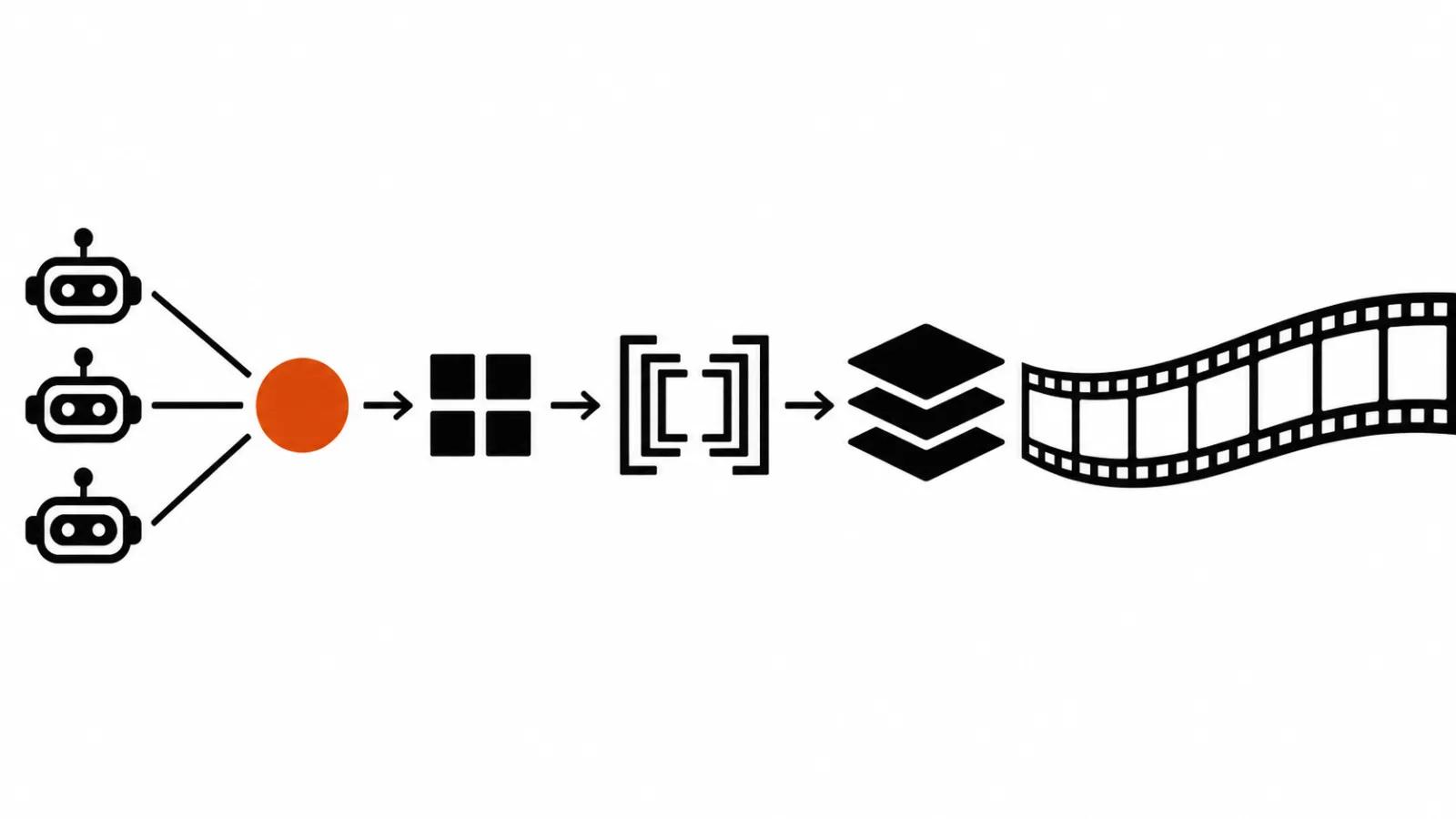
The video generation API used to live in a separate service: an account, a web interface, downloads, manual stitching into a catalog. The plugin removes that layer. A developer writes the feature, the agent pulls the SDK and wires the call inside the product.
The payments comparison holds. Nobody keeps a person who walks to the bank, payments sit in code. Video generation is heading the same way, becoming a function you import.
I like this for one reason. Where the task is routine, a built-in call costs less than a studio with billable hours. Ten thousand product cards, five languages, an upscale pass over old material, all of it runs in code with no back and forth in a messenger thread.
Video for product pages: Runway's own example
Runway describes it like this: spec a feature that gives every item in a store its own video, and the agent builds it end to end without leaving the editor. A second example is an upscale button inside an internal tool. A third is localizing new material.
This is the most common case in the category. The pattern repeats: video for product pages runs on one template and many SKUs, with an acceptance check you can write down. The template sets the scene while variables swap in the product, the background and the copy. The plugin shortens the road from idea to a working script, and then the routine begins: job queues, version storage, review.
An AI model for video work in that setup gets picked by the Model Router per request. That takes model selection off the product owner's plate and explains why a given line shows up in the spend report.
Runway aims the plugin at indie developers, technical founders, product engineers and managers. The managers are there for a reason: plenty of these features ship from a product owner with no dedicated team.

Where the agent still needs a person
The limit is simple and worth stating up front. The agent will assemble the pipeline, while decisions about story, taste and shot review stay with a human.
Everything shows up at acceptance. A frame with an extra hand, a product that lost its color, copy that slid out of frame, a jacket that changed between scenes. The agent catches those only when its instructions carry review rules, and the rules change from project to project. Without a person at acceptance, throughput turns into a stream of rejects, and rejects cost more than the assembly saved.
The second risk sits in the budget. Per-model spend tracking exists in the platform, yet somebody has to read that report. An agent can quietly move part of the jobs to a pricier model, and the invoice is where you notice.
What Runway promises on the platform side
Per the company, the platform carries Runway models plus models from other labs. The list also includes SOC 2 Type II, IP indemnification, moderation, 99.9% uptime, a ban on training on customer data applied per model, and cost accounting by model. For a business buyer the data clause often matters more than generation quality, because it settles the conversation with legal.
The Claude story is not Runway's first. The company already appeared inside Claude Marketplace, where the subject was buying Runway Creative within someone else's interface. This step is about development: the agent gets API access and builds the product.
My take: how to plug this in
Step one, one template and one catalog. Pick a task whose acceptance check you can define in an hour: a product card, a cover image, a short upscale. Install the plugin, build the pipeline, measure credit spend per unit.
Step two, put acceptance rules in writing. An instruction file with a shot checklist for the agent saves more money than an upgrade to a fancier model.
Step three, scale. Once the template is stable, short-form video at scale takes over: one scheme, many versions, a price per unit you can predict. For studios that is a signal too, since handcrafted work stays in the complicated scenes while volume moves into code.